Insurers Are Raising the Bar on Calibration Documentation
What evolving expectations mean for body shops
ADAS calibration is no longer just about completion. It is about proving it was done correctly.
Insurers are shifting from “proof of completion” to “proof of correctness.” As ADAS systems become more common and more complex, documentation standards are evolving alongside them.
Body shops that recognize this shift early will see fewer delays, fewer disputes, and more predictable reimbursement.
From completion to compliance
Adjusters increasingly expect calibration reports to include:
Clear line-item breakdowns
OEM procedure references
Pre- and post-scan results
Verification details
Incomplete or unclear documentation is one of the most common reasons claims are delayed or reduced. When reports lack structure, insurers request clarification. That kind of administrative friction can compromise and delay reimbursement.
Documentation is no longer a formality. It is part of the compliance standard to satisfy insurer needs.
Why expectations are tightening
Three forces are driving the change:
More ADAS-equipped vehicles
Calibration is now required after routine repairs, increasing claim volume.Greater safety awareness
Improper calibration introduces risk. Insurers are paying closer attention.Increased technical complexity
Environmental controls, target positioning, and OEM procedures matter. Documentation must reflect that precision.
The direction is clear. Insurers want documentation that demonstrates accuracy.
What strong documentation looks like
High-quality calibration documentation typically includes:
Detailed service descriptions
Transparent pricing
OE repair procedure support
Organized, readable reporting
When documentation is structured and insurer-aligned, reimbursement becomes more predictable.
And predictability protects your cash flow.
As standards mature, documentation cannot be an afterthought. It must be built into the calibration process itself.
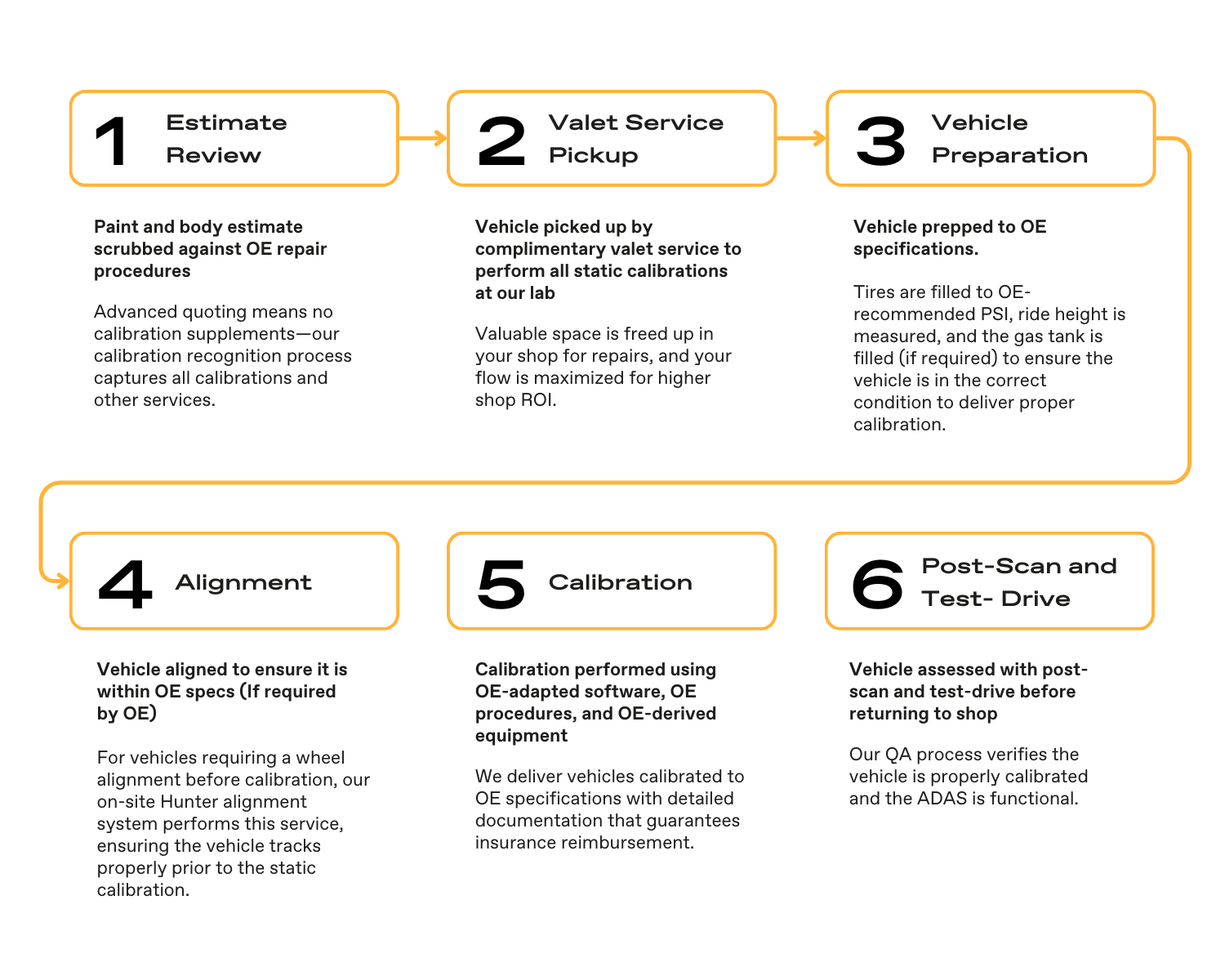
Sentric’s documentation model is designed around this reality. Every service is supported by detailed reporting aligned with OEM procedures and insurer expectations.
Do what you do best. We’ll handle the calibration and the documentation.
Want to see what reliable calibration reporting looks like?
View a sample report
Curious how our lab process works?
View the process