Static and Dynamic ADAS Calibrations: What Matters Most
ADAS calibration often gets talked about like there are only two options: static or dynamic, but that kind of framing leads to problems.
The fact is that static and dynamic are part of the same overall process. And when that fact is overlooked, vehicles leave the shop with a “pass” that isn’t rightfully earned.
What static and dynamic calibrations actually do
Static calibration is where initial aiming happens. It’s done in a controlled environment using targets and precise measurements to align modules to the vehicle. At Sentric, that means:
- Indoor, controlled setup
- Level floors, consistent lighting, clear spacing
- Target-based alignment with measurable references
- Immediate and accurate pass/fail validation
When it’s done correctly, the system is already about 95% calibrated before the vehicle moves.
Dynamic calibration happens on the road. It uses real-world inputs including lane lines and live traffic to fine-tune systems. The following factors can affect dynamic calibration and are taken into account before a Sentric technician gets behind the wheel: weather, road conditions, traffic, and visibility
At Sentric, following the manufacturer’s service information on dynamic calibrations is just as important following it for static calibrations.
Did you know?
Every vehicle is statically calibrated as part of the manufacturing process before being released to dealer networks.
Where things break down
Shops that skip calibration are a big problem, but shops that ignore proper methodology pose an even greater risk.
Not following the proper steps in completing a calibration can be just as dangerous—and possibly even more dangerous—than missing the calibration completely.
We regularly see:
- Calibrations performed in poor weather or low visibility
- Vehicles calibrated with inconsistent or unclear road markings
- Manual target setups introducing small measurement errors
- Rushing for a “pass” instead of verifying accuracy
Even small setup errors add up. A few millimeters off can still produce a pass, but the system isn’t truly aligned. Dynamic calibration can give a false pass under the wrong conditions entirely. That’s how customers end up in vehicles that drift within lanes, under/overcorrect, and throw random ADAS codes. Everything may look complete, but the vehicle’s behavior and performance say otherwise.
One unsafe process leads to another
After any calibration, the vehicle’s ADAS system isn’t fully settled. It continues making adjustments based on what it sees on the road. So if the starting point or conditions weren’t right, the vehicle continues learning from invalid inputs.
The result is unpredictable ADAS behavior, post-delivery errors, and time-consuming reworks that cost shops floor space and liability exposure.
Delivering a Sentric-grade calibration requires:
- Following OEM guidelines and service information
- large, controlled environment (static)
- Specialized equipment
- Ongoing updates and training
For static calibrations, most shops aren’t built for that, and trying to make it work in a space that wasn’t designed for calibration usually leads to compromises.
How Sentric gets it right
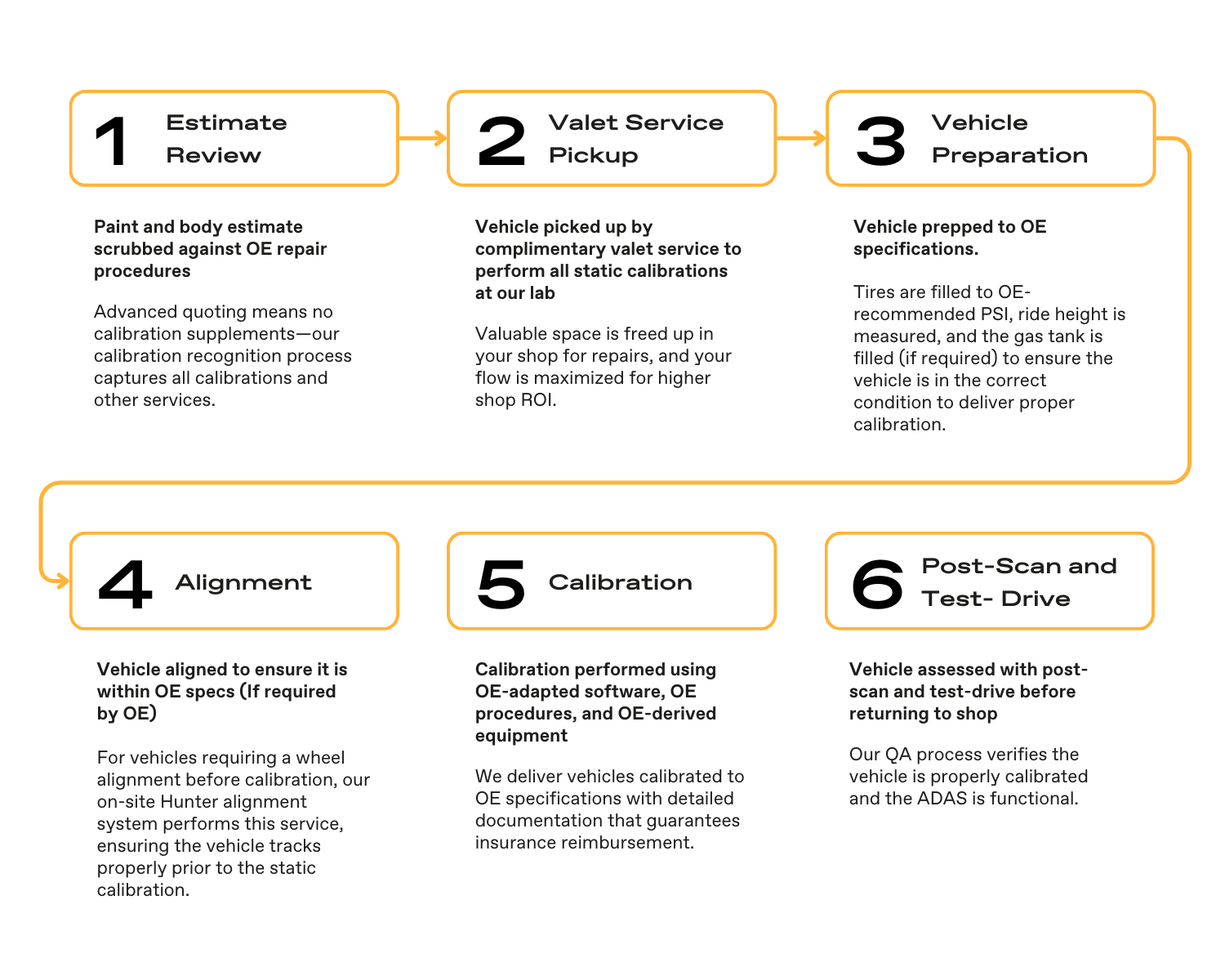
Calibration is our entire business. Sentric was built from the ground up to perform accurate, reliable ADAS calibrations, made possible with:
- Controlled environments for static calibration
- Automated target placement that reduces human error
- Proven validation beyond just a final “pass/fail”
- Human-guided, context-dependent dynamic calibrations
- Insurance-grade documentation and results
If conditions aren’t right, the calibration waits.
Speed is not a substitute for safety or accuracy.
Ultimately,
a “pass” doesn’t mean much if the system isn’t aligned the way it should be. Calibration only works when both parts of the process are done correctly and under the right conditions. That dedication and commitment to process is what actually determines how the vehicle performs once the customer gets back in the driver’s seat.
Do what you do best. We’ll handle the calibration and the documentation.
Want to see what reliable calibration reporting looks like? View a sample report
Curious how our lab process works? View the process